The allure of Cyprus, with its sun-drenched landscapes and rich history, has long drawn those seeking an elevated living experience. For discerning international buyers, the contemporary villa represents a fusion of traditional Mediterranean charm and cutting-edge design. It is within this architectural dialogue that the principles of shading, cross-ventilation, and the considered use of natural materials emerge not merely as aesthetic choices, but as fundamental tenets of comfort, sustainability, and authentic luxury. These elements define a building's relationship with its environment, ensuring a sanctuary that remains cool and inviting even under the intense Cypriot sun.
The Enduring Appeal of Mediterranean Architectural Principles
The architectural heritage of the Mediterranean is a testament to centuries of adapting structures to their unique climate. These principles, originally developed out of necessity, now serve as sophisticated design solutions for modern residential properties across the island, from the bustling coastline of Limassol to the serene hills of Paphos. Modern architects reinterpret these timeless strategies, integrating them seamlessly into designs that meet contemporary standards of luxury and efficiency. The result is a home that feels intrinsically connected to its location, offering both comfort and a pronounced sense of place.
Shading: A Masterclass in Sun Management
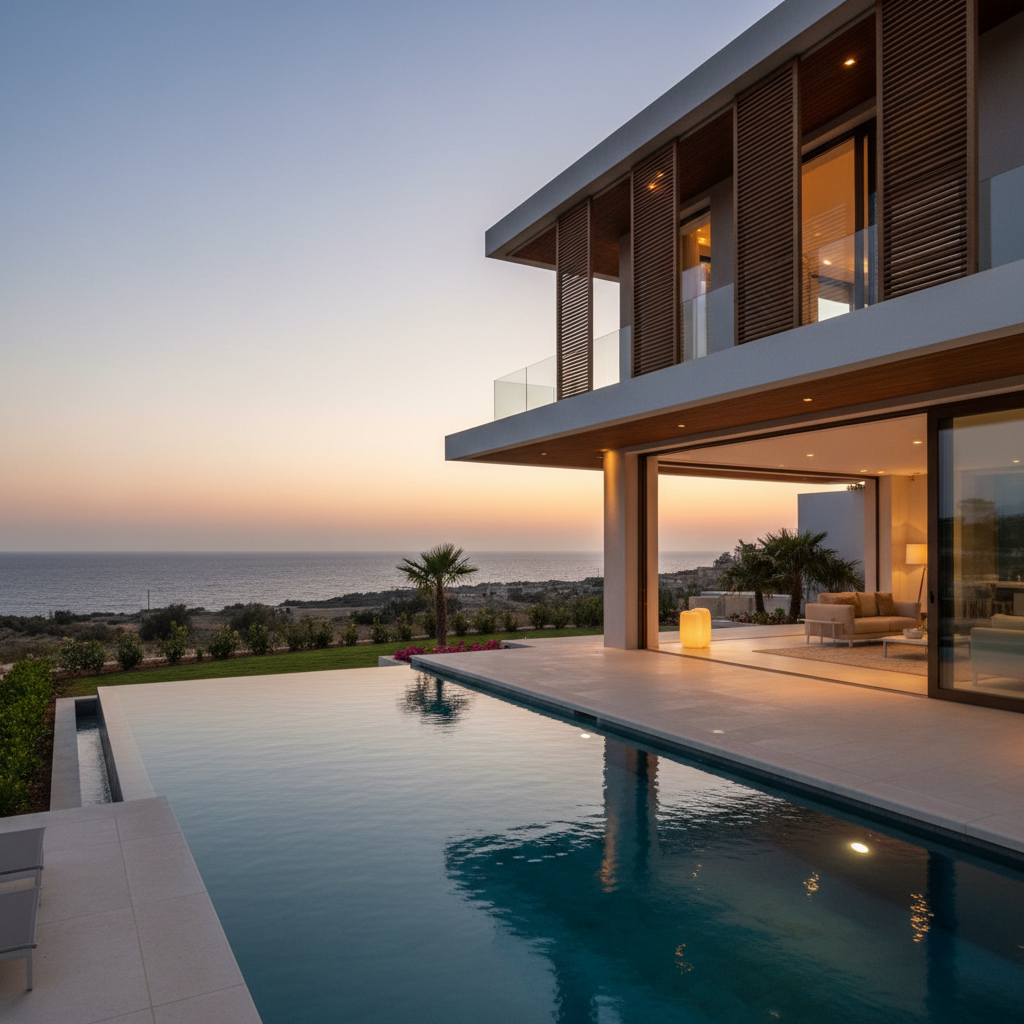
Effective shading is arguably the most critical element in Mediterranean architecture Cyprus, acting as the primary defence against the summer heat. Contemporary villas employ a variety of intelligent shading solutions, moving beyond simple awnings to integrated architectural features. Deep overhangs, pergolas draped with flowering vines, and strategically placed louvres are mainstays, casting dynamic patterns that shift with the sun's trajectory. These features not only mitigate solar gain but also create inviting outdoor living spaces, blurring the lines between interior and exterior. Thoughtful design ensures that winter sun is still allowed to penetrate, warming the interiors when desired, showcasing a balanced approach to year-round climatic conditions.
- Architectural overhangs provide consistent shade for expansive glass panels.
- Pergolas, often crafted from timber or steel, offer filtered light and support for climbers.
- Adjustable louvres allow residents to control light and privacy throughout the day.
- Recessed balconies and verandas offer shaded outdoor extensions to living areas.
- Landscaping, including mature trees, strategically placed to cast natural shade.
Cross-Breeze: Harnessing Nature's Air Conditioning
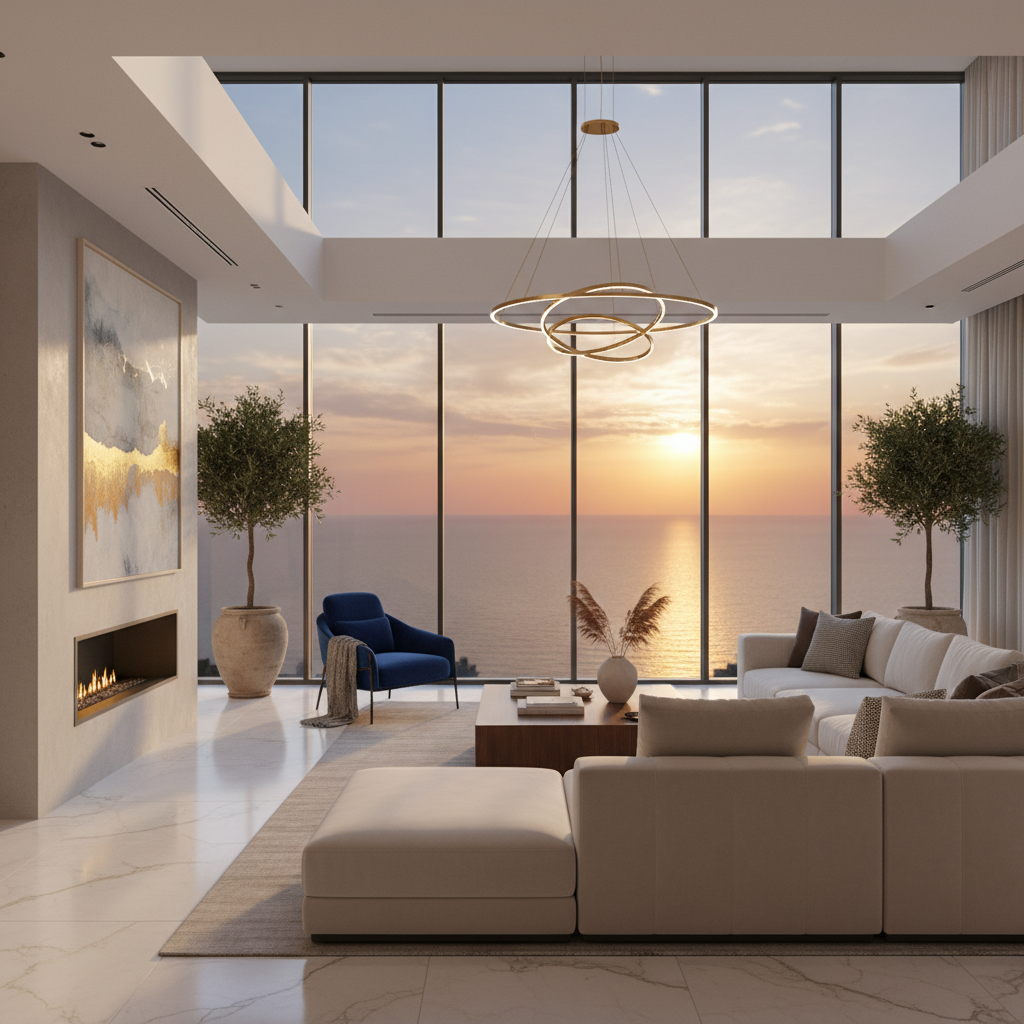
The strategic utilisation of natural ventilation, or cross-breeze, is another hallmark of sophisticated villa design in Cyprus. By carefully orienting openings and designing interior layouts, architects facilitate the flow of cool air through living spaces. Tall ceilings, generous windows, and internal courtyards are instrumental in this process, drawing cooler air in and expelling warmer air. This natural cooling dramatically reduces reliance on artificial air conditioning, enhancing comfort while simultaneously lowering energy consumption. Even in urban settings like Nicosia or Larnaca, intelligent layouts ensure that properties benefit from prevailing winds, creating refreshingly breezy interiors.
"The highest form of luxury in a Mediterranean climate is often found in the seamless integration of indoor comfort with the natural, refreshing elements of the outdoors."
Stone and Natural Materials: Rooted in Tradition
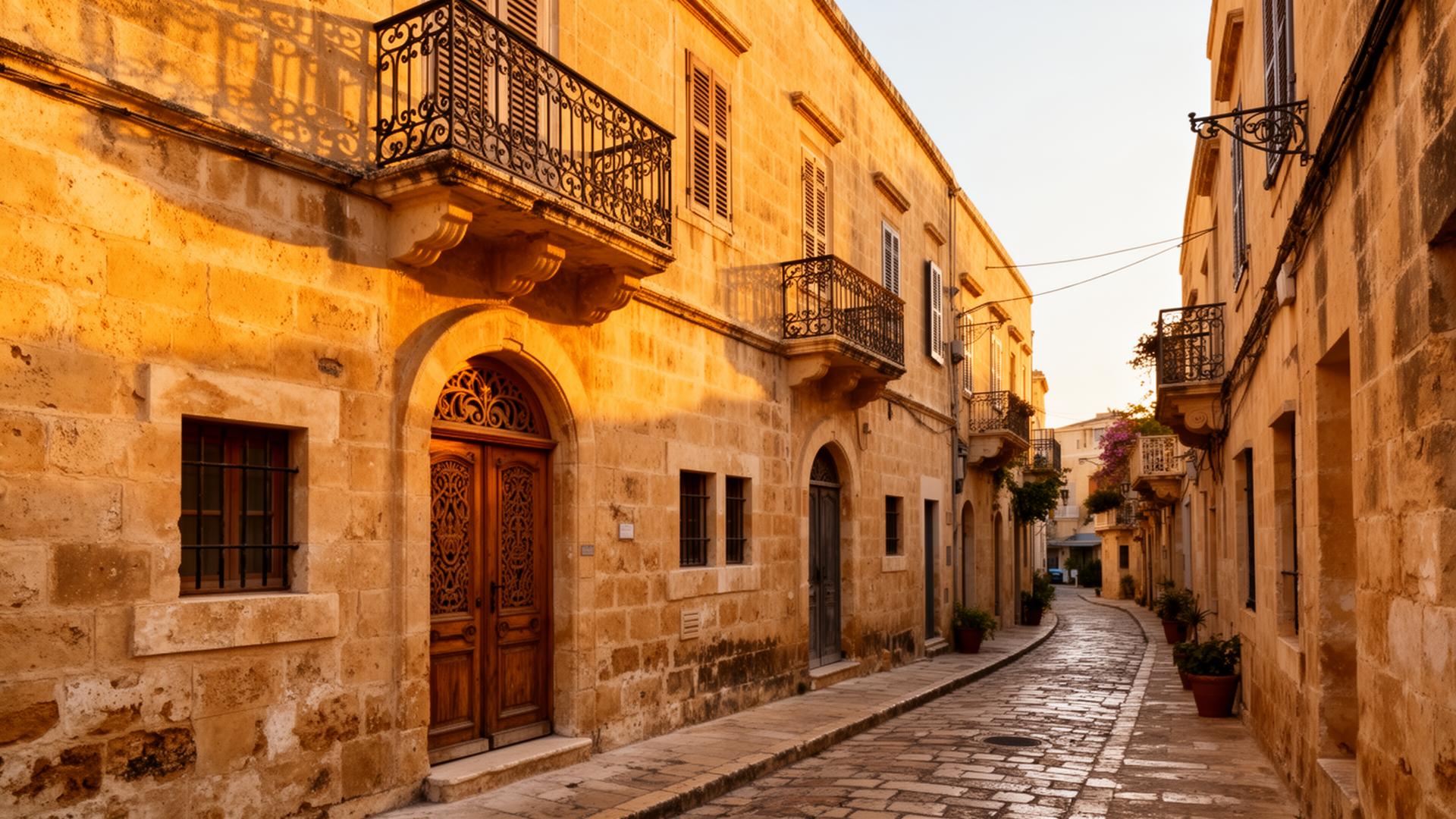
The choice of materials profoundly influences both the aesthetic and performance of a property. Local stone, with its inherent thermal mass, plays a crucial role in regulating interior temperatures, absorbing heat during the day and slowly releasing it at night. This natural insulation contributes to stable indoor climates, providing respite from the afternoon sun and retaining warmth during cooler evenings. Beyond functionality, the use of indigenous stone, timber, and plaster connects the architecture directly to the Cypriot landscape, imbuing each villa with an authentic character that synthetic materials cannot replicate. Properties along the coast in Ayia Napa or even rural retreats benefit from this natural material palette.
The Synthesis of Form and Function
The modern Cyprus villa is not merely a structure; it is a carefully calibrated environment designed for sophisticated living. The integration of traditional Mediterranean architectural principles with contemporary design ensures a property that is both aesthetically compelling and exceptionally functional. For the international buyer, this translates to a home that offers enduring comfort, reduced running costs, and a profound connection to its beautiful surroundings. These villas represent a thoughtful investment in a lifestyle defined by understated luxury and environmental harmony.