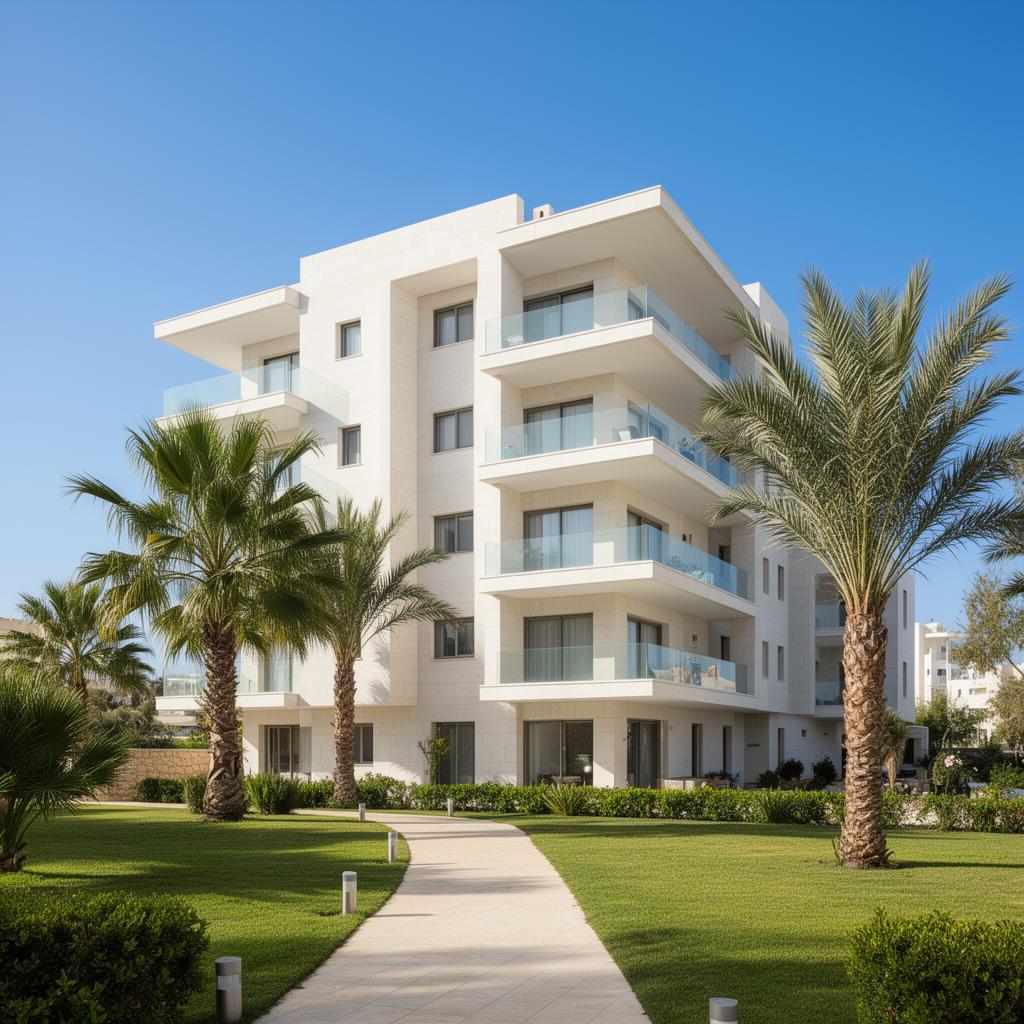

Land banking has re-emerged across the eastern Mediterranean as private investors seek tangible stores of value sheltered from market volatility. Acquiring undeveloped terrain across Cyprus offers profound capital preservation and appreciation potential, provided one can navigate the island's multifaceted regulatory framework. Far from an entirely passive asset class, land requires a rigorous understanding of planning permits, infrastructure access, and municipal masterplans.
Decoding Zoning Cyprus: The Regulatory Landscape
Planning zones dictate not merely what can be constructed, but whether development is feasible at all. The Department of Town Planning and Housing delineates territory into specific municipal and non-municipal codes, ranging from high-density residential and commercial sectors in central Limassol and Nicosia to protective agricultural or environmental perimeters around Paphos and Larnaca. For international buyers evaluating Cyprus land plots, conflating rural agricultural designations with imminent residential rezoning is among the most pervasive errors. Even when re-zoning appears logical due to suburban outward expansion, local local plans undergo protracted review cycles that remain vulnerable to municipal revisions and environmental vetoes.
Building Coefficients and Density Dynamics
At the core of site appraisal lies the building coefficient, known locally as the building factor, which determines the gross internal floor area permissible relative to the parcel's overall surface area. In prime coastal belts of Limassol, building factors can exceed one hundred percent, unlocking the possibility for substantial verticality and multi-unit architecture. Conversely, peri-urban parcels surrounding Paphos or the foothills of Larnaca often impose coverage ratios as low as ten or fifteen percent, catering strictly to low-density single-family villas. Accurately determining the buildable volume requires factoring in boundary setbacks, allowable height thresholds, and mandatory contributions toward public green corridors.
"A plot without registered public road access remains an island of unrealised capital, regardless of its theoretical density."
Crucial Due Diligence and Red Flags
Discerning investors focus intently on physical and legal encumbrances that can immobilise capital indefinitely. The absence of a registered public access road is arguably the most acute pitfall in the Cypriot land market; landlocked parcels cannot obtain a valid building permit without cumbersome right-of-way negotiations across neighbouring title deeds. Furthermore, unmapped antiquities, forestry demarcations, and natural seasonal watercourses routinely disrupt architectural schedules and impose unexpected site revisions.
- Verification of continuous frontage onto an adopted public road network to guarantee planning eligibility.
- Formal clearance confirmation from the Department of Antiquities and the Department of Forests.
- Technical assessment of direct utility connectivity, including mains water pressure, electrical substation access, and sewer connections.
- Detailed examination of the clean title deed to confirm freedom from historic mortgages, court memos, or beneficial rights of third parties.
- Independent verification of the micro-zone building factor and coverage percentage against up-to-date municipal masterplans.
The Strategic Outlook for Mediterranean Land Assets
With sustained corporate relocation into Nicosia's commercial core and sustained international demand for bespoke residential enclaves in Limassol and Paphos, strategic land banking continues to present compelling asymmetric upside. Institutional players and private family offices are actively assembling consolidated footprints adjacent to planned marina expansions, international educational campuses, and updated transit arteries. Successfully capturing this value requires patient balance sheets combined with uncompromised independent legal and spatial analysis.