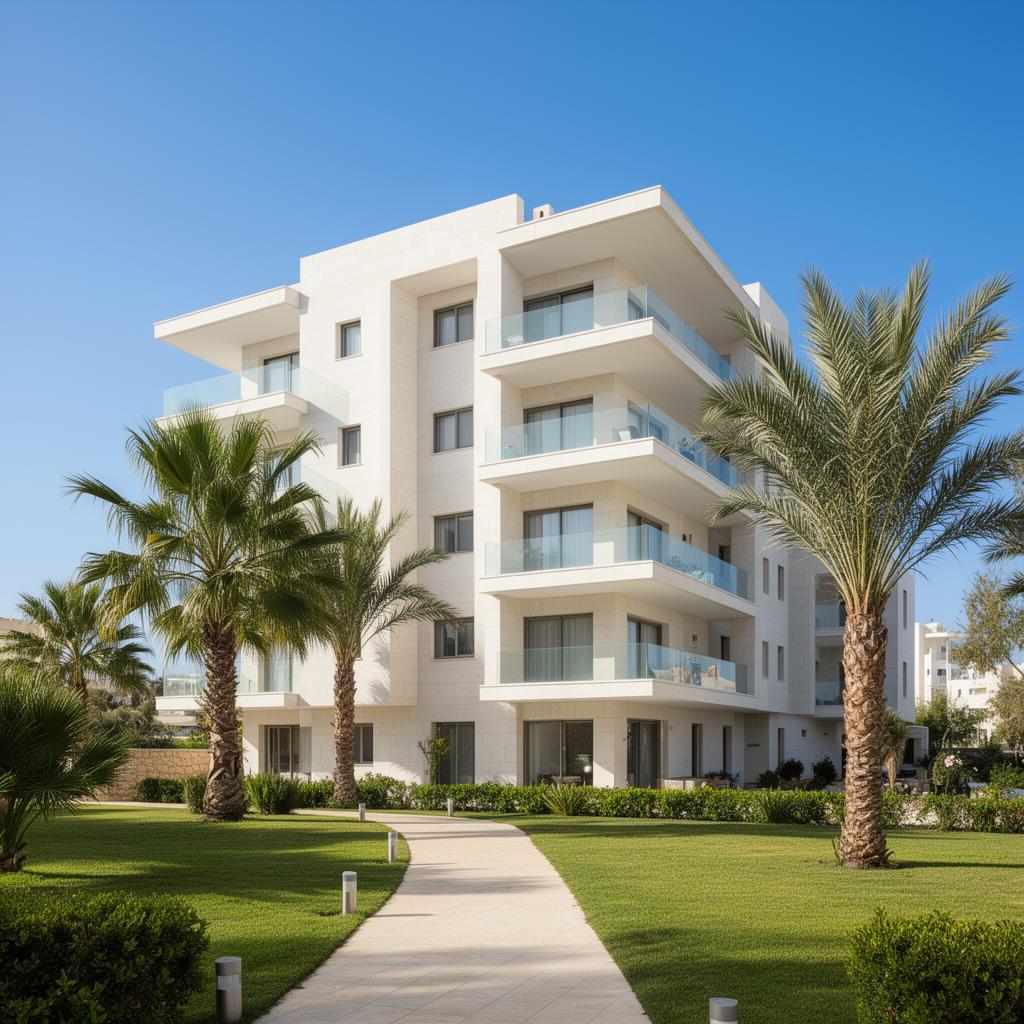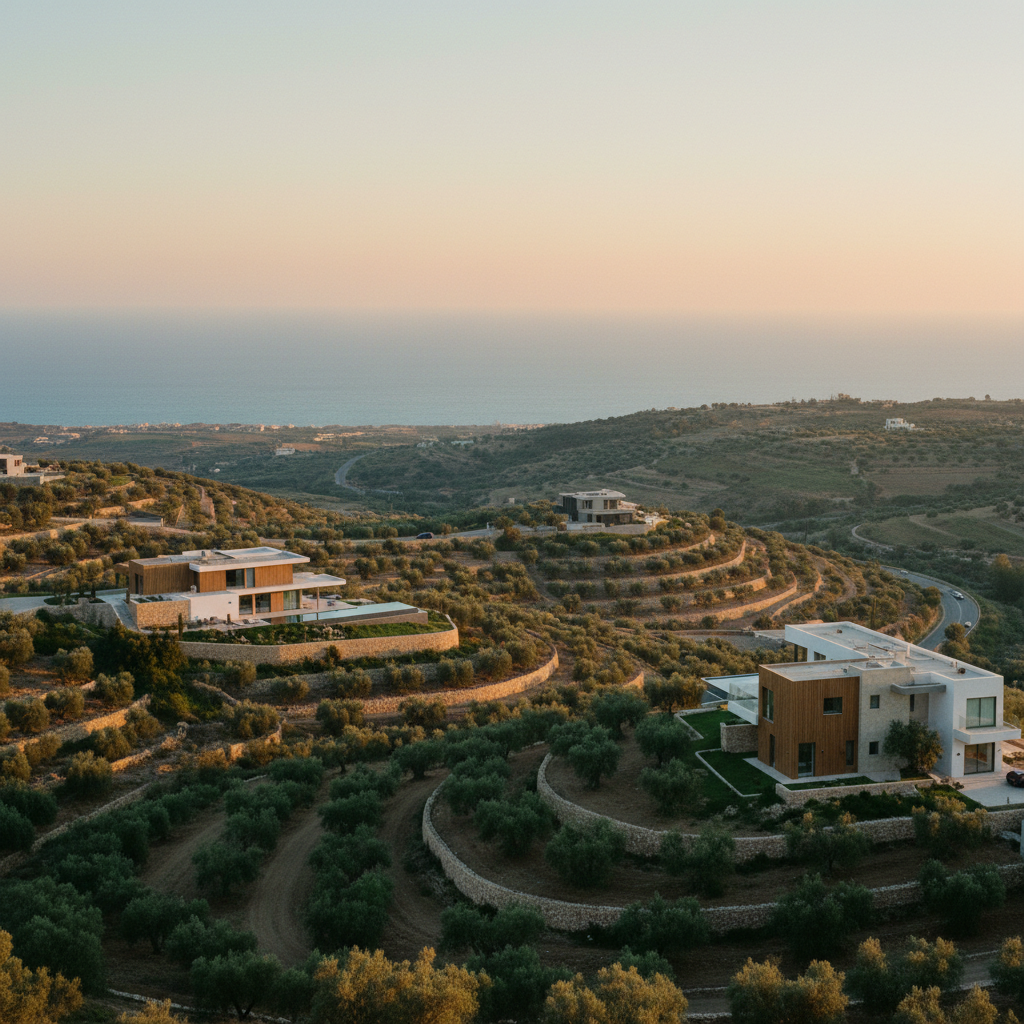

For sophisticated international capital, land banking has emerged as a compelling alternative to acquiring completed residential assets in the Eastern Mediterranean. Rather than absorbing immediate maintenance overheads or developer margins, acquiring raw land permits family offices and private investors to secure irreplaceable footholds in an increasingly constrained geographic market. However, the regulatory architecture governing real estate on the island means that surface acreage alone is a deceptive metric. Success depends almost entirely on mastering town planning parameters, infrastructure access, and the statutory limits placed on development density.
The Fundamentals of Planning and Zoning in Cyprus
Understanding zoning Cyprus frameworks requires looking past marketing descriptions and directly into the official cadastre managed by the Department of Lands and Surveys. Every parcel of land across the island falls within a designated planning zone that dictates permissible use, whether residential, commercial, tourist, industrial, or agricultural. Municipalities such as Limassol, Nicosia, and Larnaca operate under periodically revised Local Plans (Topika Schedia), while rural peripheries fall under the broader Statement of Policy. A shift in zoning classification can transform capital values overnight, yet assuming that rural land adjacent to expanding suburbs will inevitably be rezoned is one of the costliest assumptions an investor can make.
Deciphering Building Coefficients and Site Coverage
When appraising Cyprus land plots, the critical commercial variable is not the physical footprint of the soil, but the buildable area permitted by law. This is determined by the building coefficient (syntelestis domisis), which defines the total internal gross floor area allowed relative to the plot size. In prime suburban Limassol residential zones, this figure frequently reaches 80 to 120 percent, allowing multi-storey developments, whereas agricultural zones (frequently designated as 'Gamma') typically restrict construction to a negligible 10 percent or prohibit residential development altogether. Equally vital is site coverage (syntelestis kalypsis), which governs the building's physical footprint on the ground, dictating architectural layout, subterranean parking capacity, and mandatory perimeter clearances.
"A plot is ultimately worth only what the Town Planning Department permits you to construct upon it; acreage without density is merely scenery."
Critical Pitfalls: What Overseas Investors Must Avoid
The secondary land market features numerous parcels that appear attractively priced on paper but harbour structural impediments that render them practically unbuildable. Primary among these is landlocked status; under Cypriot law, planning authorities will not grant a building permit for a residential plot unless it possesses registered frontage onto a public road of statutory width. Furthermore, buyers often encounter undivided fractional shares (meridia) in larger agricultural tracts rather than clean, independent freehold title deeds. Navigating these complexities requires independent legal representation and a chartered surveyor before any reservation agreement is executed.
- Verification of clean, unencumbered individual Title Deeds, avoiding undivided shares where co-owners must consent to future division or development.
- Confirmation of direct, registered public asphalt road frontage meeting the mandatory municipal width requirements.
- Formal assessment of utility connectivity, ensuring direct access to electricity grids, municipal water supply, and telecommunications corridors.
- Topographical and geological analysis to identify steep inclines, drainage basins, or ground instability that inflate structural civil engineering expenses.
- Scrutiny of green area allocations, ensuring deduction of mandatory public open space transfers from the net buildable surface.
Strategic Geographic Allocations
Capital allocation strategies vary significantly across the primary districts. In Limassol, urban infill sites command premium valuations, pushing land banking strategies into the elevated foothills where panoramic sea views attract luxury villa developers. Conversely, Larnaca has captured institutional interest along its coastal perimeter following the decommissioning of industrial facilities and the ongoing redevelopment of the port district. In Paphos, the focus tilts toward lower-density, branded residential estates and luxury resort enclaves, while the eastern coast near Ayia Napa and Protaras remains intensely focused on seasonal hospitality permissions.
The Long View on Capital Preservation
Land banking represents one of the purest forms of long-term capital preservation when executed with forensic diligence. By decoupling an investment from immediate economic cycles and avoiding deprecating structural assets, an investor maintains maximum strategic optionality for future joint ventures, master-planned developments, or outright divestment. The prerequisite remains uncompromised clarity regarding statutory rights from day one; in Cyprus, regulatory compliance is the true foundation of wealth generation.