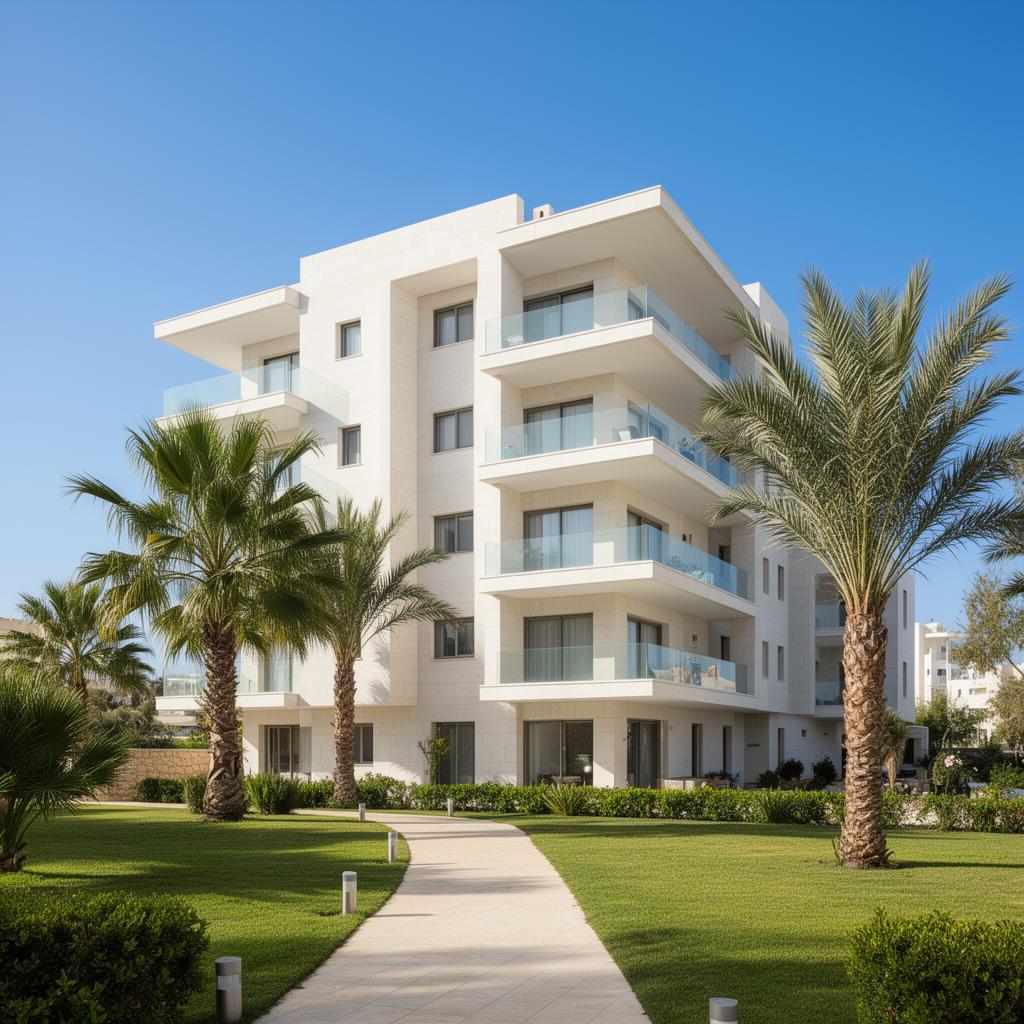

For sophisticated international capital, raw land represents the purest expression of property investment in the eastern Mediterranean. While prime apartments and turnkey villas offer immediate yields, strategic land banking provides the rare capacity to capture substantial capital growth driven by demographic expansion and spatial development. However, acquiring Cyprus land plots is a discipline governed by intricate statutory frameworks, where the disparity between nominal acreage and constructible value can catch unprepared buyers unaware.
The Capital Inflow into Undeveloped Land
The demand for prime developmental acreage across Cyprus has intensified markedly over recent years. In commercial hubs like Limassol and diplomatic quarters of Nicosia, supply constraints have propelled private family offices and boutique developers into the peri-urban peripheries. Concurrently, coastal stretches between Larnaca and Ayia Napa, as well as the hillside plateaus of Paphos, have emerged as focal points for speculative acquisitions intended for low-density luxury estates or eventual phased masterplans.
Deconstructing Zoning and Building Coefficients
Understanding zoning Cyprus regulations is the primary safeguard against capital misallocation. The Republic operates under detailed Town Planning Schemes and Local Plans that classify land into distinct zones, each dictating precise development parameters. The two most critical metrics are the building coefficient (or density ratio) and the site coverage ratio. The building coefficient determines the total permissible gross internal floor area as a percentage of plot size, whilst coverage governs the building footprint on the ground.
- Residential zones (such as Ka or H designations), which offer predictable building coefficients ranging from 10% in low-density enclaves to well over 100% in dense urban centres.
- Tourist zones (T designations), permitting hospitality developments and select residential masterplans, often subject to distinct setbacks and environmental criteria.
- Agricultural zones (typically Gamma designations), which restrict building density strictly to nominal figures, usually capping domestic footprints unless specific criteria are met.
- Protected or green zones (Z designations), where structural intervention is broadly prohibited to preserve natural hydrology, forestry, or coastline integrity.
"In Mediterranean land acquisition, total acreage is merely an optical metric; the authentic sovereign value is dictated entirely by buildable density and unencumbered legal title."
The Critical Caveats: What to Avoid
The most pervasive hazard in land banking is the acquisition of an enclaved parcel, locally termed an esokleisto. A plot without direct frontage onto a registered public road carries no automatic right to development until a legal right-of-way is negotiated or adjudicated, a procedure that can require years of civil litigation. Investors must also account for statutory land deductions: when transforming a raw field into partitioned building plots, local authorities routinely mandate the surrender of up to 15 to 20 percent of total surface area for public green spaces and secondary road networks.
Furthermore, title cleanliness demands exhaustive scrutiny. Historically, family inheritances in Cyprus frequently produced undivided co-ownership structures, where multiple beneficiaries hold fractional shares of a single parcel. Entering into a purchase without securing an absolute, clean transfer of a separate and clear title deed invariably invites protracted legal entanglement, especially within rural sections of Paphos and Larnaca.
Essential Due Diligence for Portfolio Investors
A rigorous acquisition protocol requires commissioning an independent topological survey alongside a detailed planning certificate before funds are committed. This ensures precise verification of boundaries, elevations, and easements that may traverse the land, such as subterranean water pipelines, ancient antiquities reservations, or high-voltage transmission ribbons. Engaging a seasoned local architect to confirm infrastructure access—specifically mains water, high-voltage electrical grid connection, and telecommunications—prevents disproportionate capital expenditure downstream.
The Strategic Outlook
As urban expansion accelerates, the selective accumulation of strategically positioned land remains one of the most asymmetric wealth preservation vehicles in Cyprus. For discerning purchasers who navigate zoning classifications with precision and respect the statutory planning cadence, unbuilt plots offer an enduring buffer against inflation and an unmatched foundation for bespoke development.