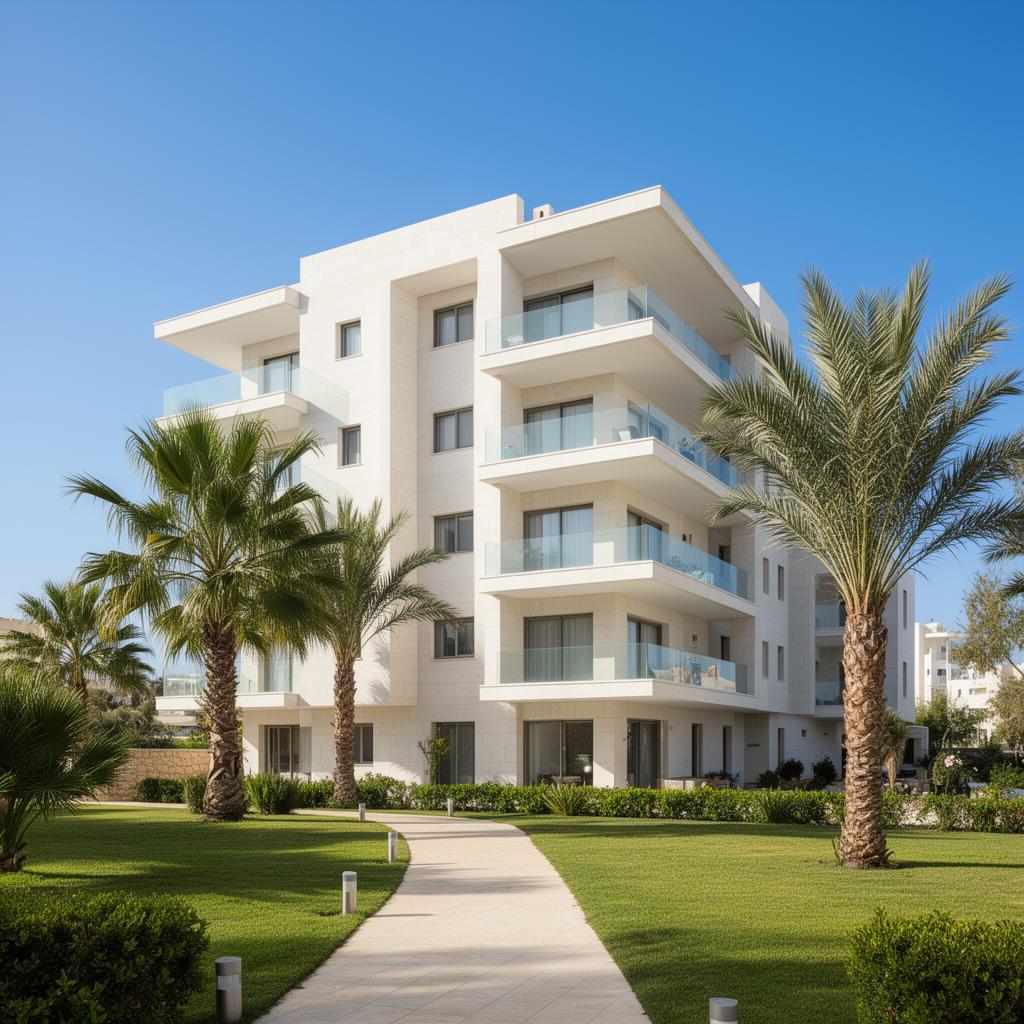

Acquiring strategic land parcels across the Mediterranean has long been considered an astute vehicle for capital preservation and generational wealth. In Cyprus, where prime finished stock commands record premiums, institutional family offices and private investors increasingly turn toward land banking. Yet raw land is governed by intricate municipal frameworks, where nominal plot area rarely correlates directly with allowable build volume.
The Capital Dynamics Driving Plot Acquisition
The momentum behind acquiring Cyprus land plots stems from acute urban supply constraints. In central Limassol, where waterfront apartments have reached historic price tiers, prime developmental plots are scarce, prompting development capital to migrate into the surrounding foothills and western coastal zones. Simultaneously, Larnaca's ongoing port and marina reorganisation has unlocked adjacent residential and mixed-use tracts, creating exceptional early-cycle entry points for patient capital.
In Nicosia, the focus leans heavily toward commercial corridors and educational enclaves, whereas Paphos and the Ayia Napa perimeter attract capital targeted at ultra-prime villa estates. However, navigating these markets requires far more than identifying desirable geographical positioning; it demands complete technical mastery of local planning matrices.
Deciphering Zoning in Cyprus and Building Density
The statutory framework governing zoning Cyprus territories categorises land into clear operational tiers: residential (predominantly prefixed by 'Ka'), commercial ('Eb'), tourist ('T'), agricultural ('G'), and protected environmental zones ('Z'). Investors must recognise that holding an agricultural designation adjacent to an expanding residential quarter is a long-term speculative play, as municipal rezoning reviews occur on multi-year cycles and remain subject to political and infrastructural criteria.
Equally decisive are two statutory ratios: the building coefficient (density) and site coverage. The building coefficient dictates total gross internal floor area permitted relative to the plot size, whilst coverage establishes the physical building footprint on the ground. A plot with a 60 percent building coefficient and 35 percent coverage allows verticality, whereas lower coefficients typical of hillside Paphos parcels ensure low-impact, horizontal estate architecture that protects surrounding sea panoramas.
"Understanding the precise interplay between building density and coverage ratio separates successful land developers from investors trapped in unviable assets."
Essential Pitfalls to Avoid in Plot Due Diligence
- Landlocked parcels lacking registered public road access, which legally prevents building permit issuance until access easements are obtained.
- Mandatory public green area and road widening deductions, which routinely reduce net buildable surface area by 10 to 15 percent upon subdivision.
- Invisible geological constraints, including steep inclines requiring costly retaining engineering, or subterranean water tables near coastal belts.
- Antiquities and forestry restrictions, where parcels situated near heritage perimeters fall under strict Department of Antiquities oversight.
- Unregistered family shares or fragmented title deeds that lack separate horizontal ownership certificates.
Regional Nuances Across Prime Cyprus Markets
Due diligence must reflect local territorial realties. In coastal Limassol, premium residential plots in areas like Agios Tychonas or Mouttagiaka often feature challenging topography; here, site preparation costs must be calibrated against projected resale value. In Paphos, particularly around Peyia and Sea Caves, environmentally sensitive coastal setback buffers strictly curtail build footprints to preserve marine visual amenity.
Larnaca presents a distinctly different proposition, with expansive, level parcels offering lower civil engineering costs. Investors must nevertheless scrutinise local water and electrical grid capacity, ensuring that off-grid connections do not impose unbudgeted municipal contribution fees. In eastern sectors near Ayia Napa and Protaras, seasonal utility variations and specialized tourist zoning mandates require strict adherence to minimum hospitality thresholds.
The Strategic Outlook for Land Banking
Cyprus remains one of the Eastern Mediterranean's most resilient jurisdictions for real asset appreciation, underscored by sustained corporate relocation and robust foreign direct investment. However, successful land banking requires an institutional approach to risk: thorough title searches through the Department of Lands and Surveys, independent topographic surveys, and architectural feasibility studies conducted well prior to contract execution. When structured properly, unencumbered land plots remain the ultimate hedge against urban density and inflationary pressure.